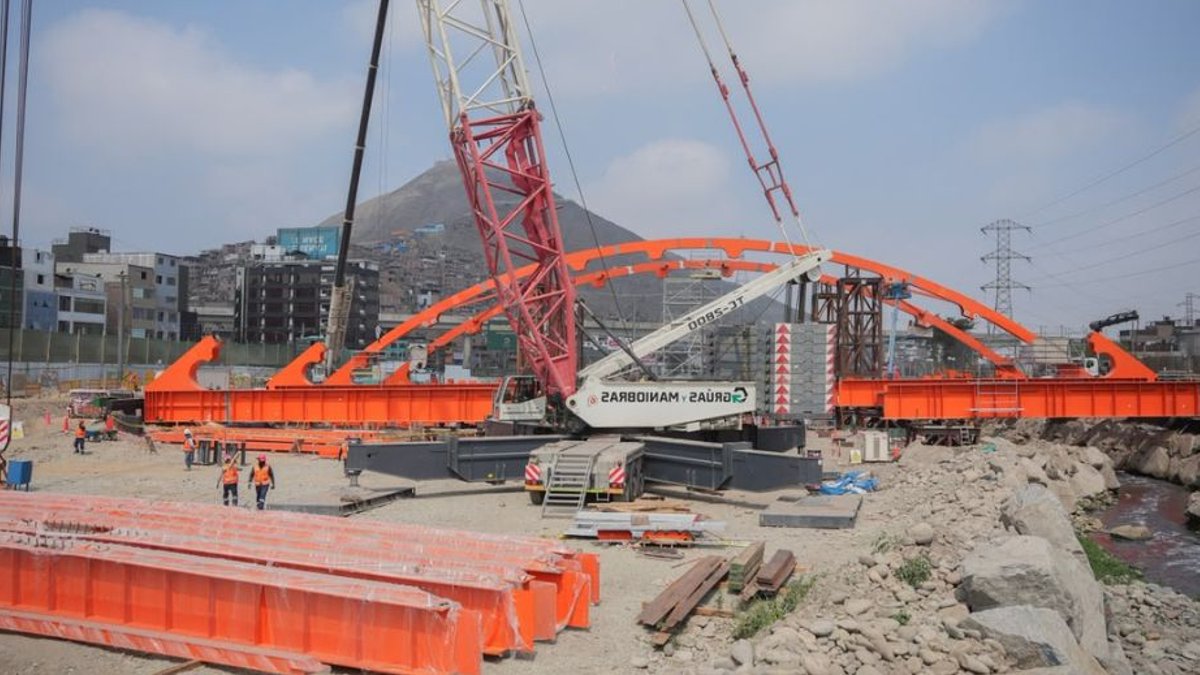
Work on the Puente Próceres has reached an 80 percent completion rate, aiming to connect San Juan de Lurigancho with El Agustino. The infrastructure project, located over the Rímac River, involves an investment of S/ 89.9 million and is expected to benefit more than 200,000 residents. The Municipalidad Metropolitana de Lima reported the progress following an inspection of the area, noting that the structure is part of broader efforts to improve mobility in Lima Este. This specific intervention addresses a critical gap in the city’s eastern transport network, which has historically suffered from inadequate crossings over the waterway.
Route details and construction scope
The intervention takes place along the Próceres de la Independencia avenue, spanning from the Malecón de Amistad to Plácido Jiménez Avenue. The total length of the work is 1.62 kilometers. A central component of the project is the construction of two new bridges, each measuring 91 meters in length. These structures are designed to link the riverbanks and facilitate both vehicular and pedestrian movement. By separating traffic flows, the design intends to mitigate potential bottlenecks that currently plague this heavily trafficked corridor.
Officials stated that the site suffers from high mobility demand, contributing to existing congestion. The new bridges will reinforce a circulation axis that handles daily population and transport movements. The completion of the infrastructure is intended to complement existing facilities with additional space for transit and integrate safety measures into the urban environment. This reinforcement is vital for handling peak-hour traffic, ensuring that the flow of vehicles remains stable even during the busiest times of the day.
Read Also: BIM reshapes modern construction standards
Surrounding improvements and safety measures
Beyond the bridge structures, the project includes a series of complementary works aimed at regulating circulation and enhancing safety. These include road signage, traffic signals, pedestrian stops, and walking paths. Green areas are also being treated as part of the intervention to better integrate the infrastructure with the area’s mobility trends. These additions are not merely aesthetic but are calculated to improve the overall livability of the district by providing organized spaces for non-motorized transport.
Because the project develops over the Rímac River, officials have incorporated criteria related to prevention and preparation for natural events, such as El Niño. These measures form part of the municipality’s strategy to reduce risks and protect citizens. The inclusion of such protocols is considered critical for Lima, where weather conditions and natural phenomena can impact service continuity and urban connectivity. Engineers have applied specific construction techniques to ensure the longevity of the structures against potential flooding and water surges.
Historically, major infrastructure projects in the region have struggled with delays and budget overruns, making the current 80 percent completion rate a notable milestone. While this specific project has maintained its original timeline and funding level, the inclusion of El Niño resilience measures reflects a shift in how authorities are approaching long-term urban planning in vulnerable zones. This proactive approach signals a commitment to building infrastructure that withstands environmental challenges, ensuring that the investment yields lasting benefits for the community.
Read Also: DIY Bird Bath Made From Household Items
Strategic impact on Lima East
The Puente Próceres is positioned as a strategic intervention to strengthen connections between the two districts. The addition of the two 91-meter bridges will provide new circulation options, potentially easing traffic flow in a sector that has long dealt with congestion. The project also introduces urban design elements like pedestrian paths and green spaces, which are intended to create safer environments for residents. By improving accessibility, the bridge serves as a catalyst for economic activity in the surrounding neighborhoods.
With an 80 percent progress report, the structure is advancing toward its final stage. The combination of physical infrastructure and ancillary improvements suggests a full approach to solving mobility issues in the area. The investment of nearly S/ 90 million targets a population of over 200,000, addressing a critical need for improved transit links in the eastern part of the capital. The full nature of the works ensures that the benefits extend beyond mere transit, enhancing the quality of life for the residents living along the intervention zone.




Leave a Reply