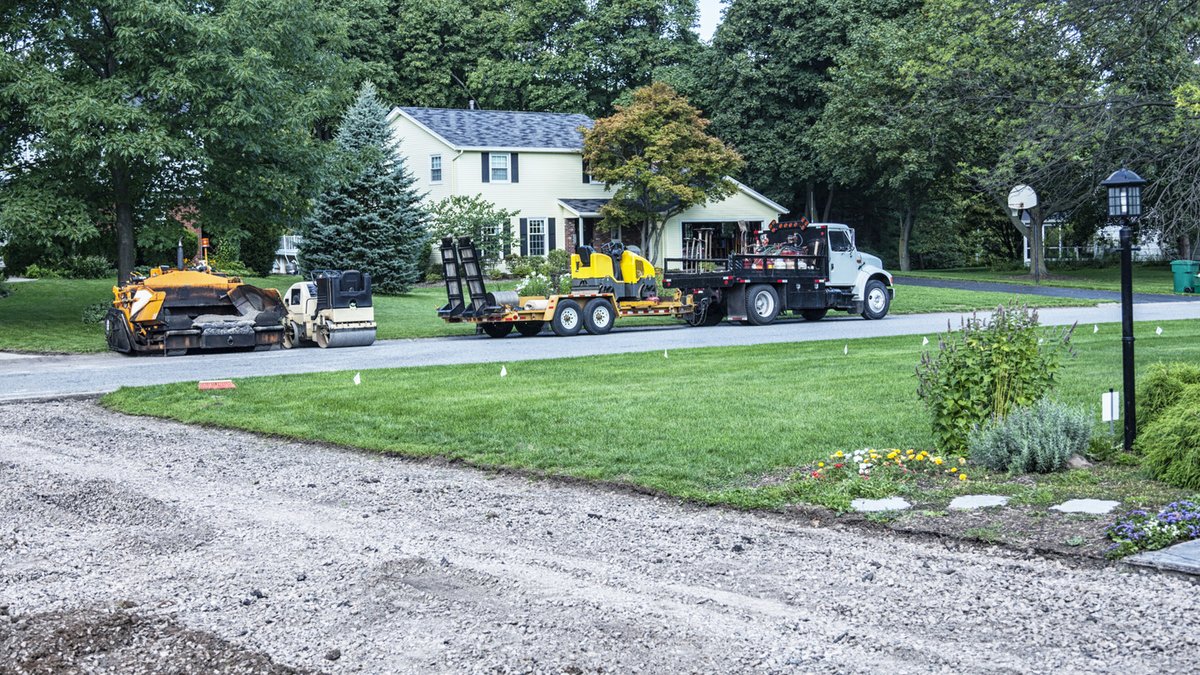
Homeowners compare crushed stone and gravel driveways to find the most affordable DIY solution for a functional, attractive entrance.
Cost comparison of the two aggregates
Price checks show a wide range for both options. The angular aggregate can cost between $20 and $115 per cubic yard, while the pebble‑like material spans $15 to $250 per cubic yard, according to a national home‑service database.
Local supply stores and regional quarry pricing create further variation. In some markets the harder rock undercuts the softer material, while elsewhere the reverse is true. This makes a simple “cheapest” label unreliable.
Take a typical 20‑foot by 20‑foot driveway laid to an 8 inches depth. The volume works out to roughly 10 cubic yards, meaning a material priced at $50 per yard translates to a $500 material cost before labor.
Durability and maintenance considerations
The angular rock tends to interlock because of its sharp edges, providing a stable base that resists displacement under vehicle weight. This interlocking quality often extends the service life of the surface.
Related: Tape Colors Make a Difference for Painters
Because it holds together better, the maintenance schedule for this aggregate is usually less frequent. Homeowners report fewer instances of having to re‑grade or top up the surface after heavy rain.
Choosing the softer aggregate may save money up front, but its rounded shape can shift more easily, especially on steep slopes. Over time, owners might need to add more material to keep the surface level.
While the price gap is narrow, the decision often hinges on how long the surface is expected to perform without major repair. A material that stays in place reduces the need for periodic topping, which can offset a higher initial outlay.
Both options share a common visual appeal, yet they differ in texture. The angular rock presents a sharper look that some homeowners associate with a more industrial feel, whereas the rounded stones give a smoother, more garden‑like appearance.
Stone size also influences drainage. Larger pieces create bigger voids, allowing water to pass through quickly, but they can appear less uniform. Smaller fragments improve visual consistency but may be prone to washing away under heavy traffic.
Related: Culinary Icons Unite at Mount Nelson
Families with children or pets prefer the smoother material.
The softer stones often feel more comfortable underfoot and reduce the risk of splinters.
One way to stretch a budget is to layer the driveway. Builders sometimes place a thin top layer of the more attractive, higher‑priced stone over a thicker base of the less expensive material. The method requires extra labor but can lower overall cost while preserving aesthetics.
When planning a DIY project, calculating the exact volume is important. Over‑ordering leads to unnecessary expense, while under‑ordering forces a costly second delivery.
In practice, the final choice rests on a balance of upfront price, expected lifespan, and the intended use of the space. Homeowners who value long‑term stability may lean toward the angular rock, whereas those prioritizing initial savings and a softer feel might select the rounded material.




Leave a Reply