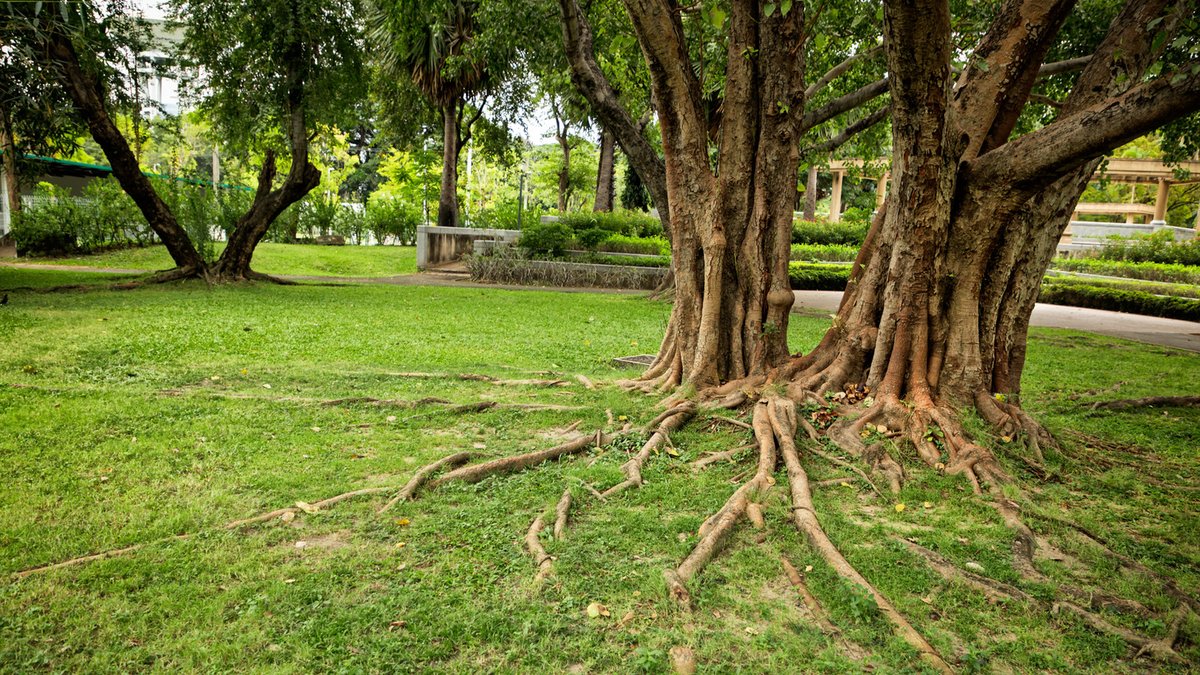
Tree roots can cause a range of problems, from popping up in unwanted places and stealing nutrients from other plants, to damaging underground structures like plumbing and foundations. Systemic herbicides can help eliminate unwanted tree roots.
Systemic herbicides work by traveling through the vascular system of the plant roots, disrupting essential processes like cell division and amino acid metabolism, leading to tissue and plant death. Glyphosate and triclopyr are common examples of systemic herbicides.
These herbicides can be harmful or even deadly to the whole tree, so they are best reserved for roots attached to a tree that you want to eliminate. The same principle applies to roots emerging from a stump that’s producing unwanted growth.
Before treating roots, it is essential to discuss the issue with your neighbor if the roots are connected to a living tree on their property. This can help avoid any potential conflicts or damage to your neighbor’s tree.
Related: Rustic Garden Beds Offer Simple Yard Upgrade
Systemic herbicides can work relatively quickly, with some products producing visible effects within a few days to several weeks. To use them effectively, carefully expose a large section of the unwanted tree root, drill a few holes in it, and pour the herbicide into the holes using a funnel.
This method can also be used on a tree stump that’s producing new unwanted roots. When drilling holes, make sure to go beyond the bark, so the systemic herbicide can come into contact with living tissue, preferably the vascular system.
It is also important to pour the systemic herbicide into the drilled holes as soon as possible, as delaying treatment can reduce the amount of herbicide absorbed by plant tissue.
Different tree species require systemic herbicides with different ingredients and concentrations. To choose the right one, talk to an expert or contact your local extension service, which can help you select the best product for killing unwanted tree roots in your yard.
Related: Luxury riverside living unveiled in Hurlingham
In dealing with unwanted tree roots, it is worth considering how this issue compares to other common gardening problems. The use of systemic herbicides to kill tree roots is similar to the use of chemicals to control weeds, in that both methods require careful consideration of the potential impact on surrounding plants and soil.
When using systemic herbicides, it is essential to follow the instructions carefully and take necessary precautions to avoid spilling the herbicide onto surrounding vegetation and soil. This can help minimize the risk of unwanted results and ensure the effective elimination of unwanted tree roots.
By taking a careful and informed approach to using systemic herbicides, you can effectively kill unwanted tree roots and prevent further damage to your garden or underground structures.





Leave a Reply