‘In that moment, the feel of the garden became clear to me,’ says Luciano of the instant he glanced at the fading sunlight across the trunk of an evergreen oak and stone wall one late autumn afternoon. This epiphany, influenced as much by the architectural as well as the horticultural, is played out in both the broad strokes and the details of the private garden in Fabbrica. Situated 470 metres above sea level and surrounded by 24 hectares of organic vineyards in southern Tuscany, the site serves as a canvas for his vision. Now based in London, Luciano was born and grew up in Siena. As a teenager, he worked briefly in the gardens of Villa Gamberaia outside Florence, and it was there that he first encountered the ordered green universe of Italian garden tradition — a world defined by geometry, harmony, proportion, rhythm, repetition, and scale. Influenced by his experiences there, at the age of 21, he left Italy for London to study garden design and later set up his own studio.
For just over two decades, Luciano has run a busy practice, travelling constantly between England, continental Europe, the US, and North Africa. However, it was not until 2015 that he was commissioned to design and curate his first garden back on Tuscan soil, at Fabbrica in the Val d’Orcia. This region stretches from the hills south of Siena to Mount Amiata, a dormant volcano where Luciano used to ski as a boy. There is an exhilarating quality to its settings: the beauty of cornfields, olive groves, and cypress trees is accompanied by something raw, elemental, and uncompromising. Receding horizons of bleached ridges turn the view into a vast relief map, a terrain so striking that when Anglo American writer Iris Origo arrived to renovate the estate of La Foce with her husband in the 1920s, she likened the area’s geography to the surface of the moon.
Since receiving the commission, Luciano has visited La Foce repeatedly to study the extraordinary gardens Iris and the designer Cecil Pinsent conceived and planted there between 1927 and 1939. These gardens continue to be nurtured and developed by Iris’s elder daughter, Benedetta Lysy. On steep ground that Iris herself despairingly characterized as ‘a dust heap,’ she and Cecil created a richly layered composition in which everything speaks with everything else. The Mediterranean garden at La Foce includes the burgundy Iris ‘Medici Prince’ and silvery mounds of Helichrysum italicum and Artemisia ‘Powis Castle’ set against a backdrop of almond trees and olive trees. As Luciano observes about La Foce, ‘Everywhere you look, the formality of the vertical and horizontal sits alongside the wavering, the undulating and the interrupted — against the backdrop of this ancient setting, every element has a heightened significance.’
Like La Foce, the garden at Fabbrica is a masterclass in dialogue between different elements. Each component — the two evergreen oak hedges on the slant, the umbrella pine tree, the volumes of clipped box, and the stone water trough — is placed with the precision of a piece in a game of chess. When you sit on the bench as the shadows lengthen, experiencing a sense of enclosure, the impact of Luciano’s childhood in a walled city becomes clear. This feeling is juxtaposed with the influence of the 20th-century Florentine setting architect Pietro Procinai.
Related: Women who shaped Groot Constantia’s history
The adjacent orto, or vegetable garden, adds abundance to the structural clarity of the courtyard, mixing fruits, vegetables, and herbs with peonies, dahlias, and climbing roses. Articulated through hornbeam, box hedges, paved paths, water, and a pergola of white wisteria, its repeating geometries and embedded patterns draw on archetypes of the cloister and hortus conclusus (enclosed garden). These structures evoke the associated rituals of meditation, contemplation, and growth.
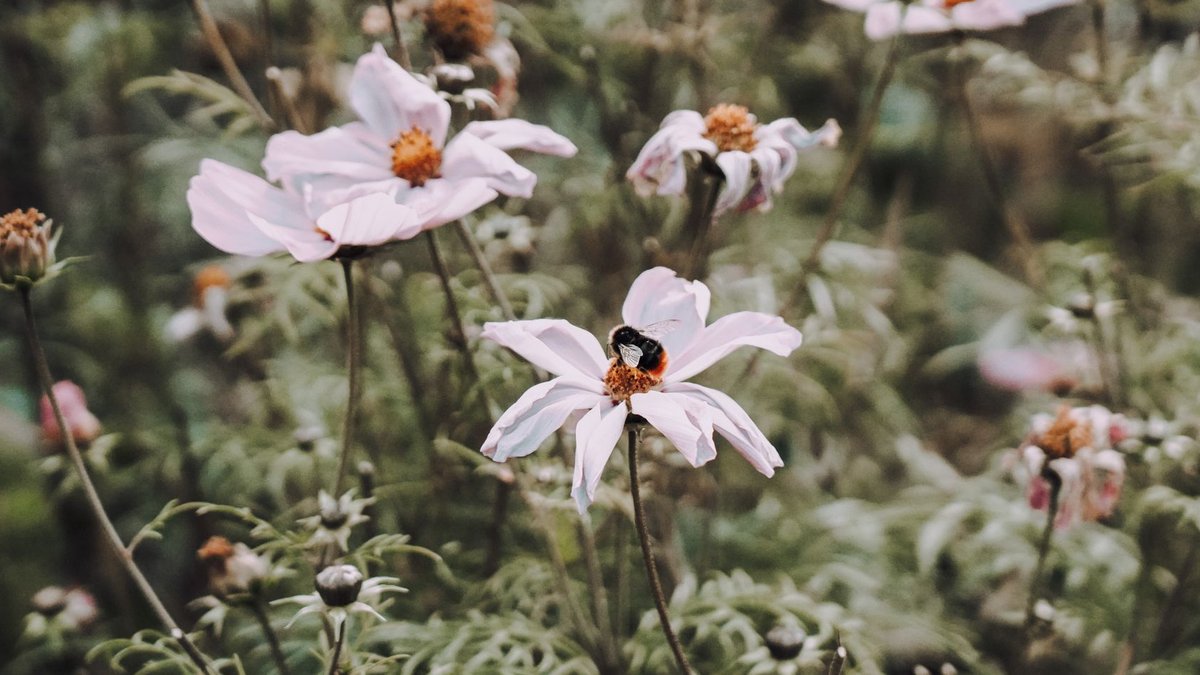
It is in the ‘Mediterranean garden’ that the sequence of spaces at Fabbrica reaches its acme in an astonishing profusion of flowers and aromatics. The surrounding setting is co-opted as part of the design, functioning in the manner of a Renaissance painting. Sinuous beds of iris, hollyhocks, cistus, euphorbia, rosemary, knautia, clematis, verbena, salvia, verbascum, and hellebores curve and flex in response to one another, dancing together in a way that is both organic and meticulously considered. The composition reflects the time Luciano spent at Great Dixter in East Sussex. He explored planning possibilities in a specially designated experimental bed with head gardener Fergus Garrett and James Horner, who has gone on to work closely with Luciano on several projects, including this garden.
If the narrative of the Fabbrica garden embodies Luciano’s personal evolution as a designer, then it is also the narrative of his studio’s development. For him, collaboration is key to challenging the creative process and pushing the limitations of a familiar language. Every project, he is keen to stress, is a product of the involvement of each member of his purposefully small studio — no one more so than Alessandra Pizzetti, a fellow Sinese whose instincts and judgement Luciano trusts implicitly. As the work at Fabbrica continues, so will the conversations, the collaborations, and the creative evolution.
Credits
Images: Andrew Montgomery





Leave a Reply