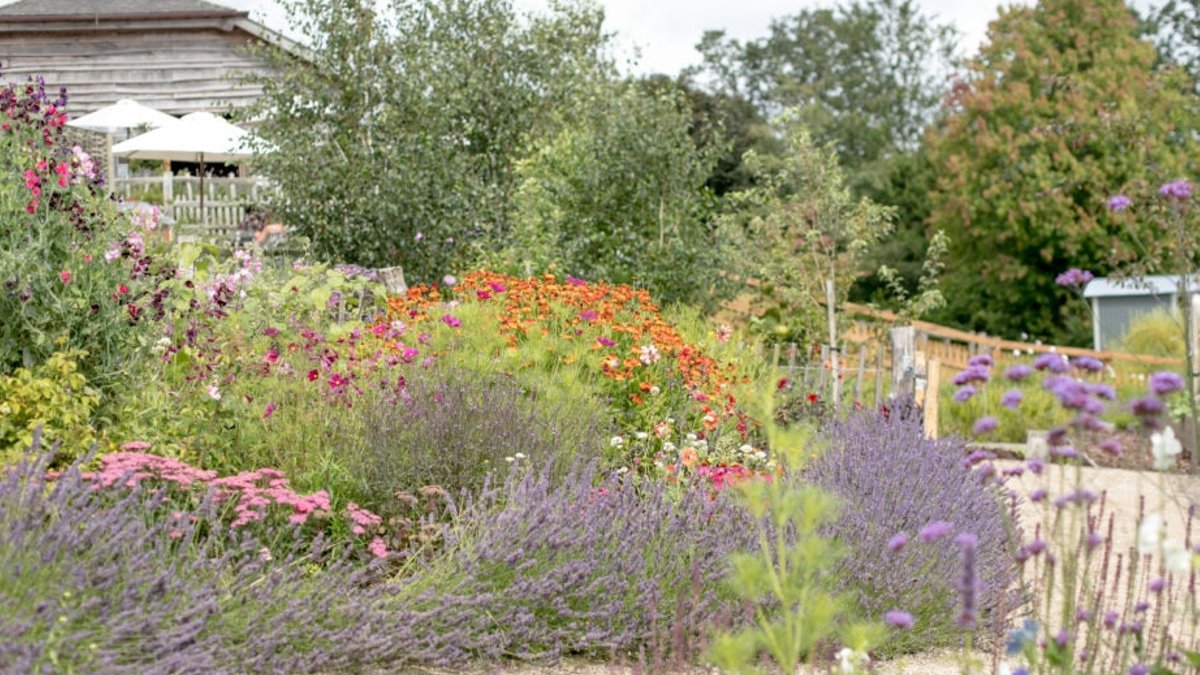
Gardens suffer during extended dry spells. A practical three-point plan helps plants endure without daily watering.
Store rainwater for dry periods
Rain barrels, water butts, and repurposed containers hold hundreds of gallons. Attach them to downpipes before autumn storms. A secure lid or mesh prevents accidents involving children and small animals.
Soil quality matters just as much. Mixing well-rotted compost into the ground in autumn improves moisture retention. After rain, spread a 5 cm layer of organic mulch—it slows evaporation like a sponge.
Apply water efficiently
Watering in the morning or evening minimizes evaporation. Evening sessions allow plants to absorb moisture overnight, though damp soil may attract slugs and snails.
Related: North Yorkshire garden offers fairytale intrigue and romantic roses
Roots need water, not leaves. A thorough soaking encourages deeper root growth, where soil stays cooler and wetter. Frequent light sprinkles keep roots near the surface, making plants more susceptible to drying out.
Newly planted trees, shrubs, and seedlings require priority. Mature plants often survive weeks without water, wilting slightly by day but recovering at night. Frequent shallow watering, however, reduces their long-term resilience.
Direct water to plant bases, especially those with broad leaves that block rain. Apply it slowly to avoid runoff. If leaves scorch, leave them—they shade healthier foliage beneath.
Fertilizing during drought harms plants. Trees may drop leaves to conserve resources, and stressed plants struggle to process nutrients.
Related: Dual-Key Apartment Becomes Multigenerational Family Home
Safeguard container plants
Dried peat-free compost can pull away from pot edges, causing water to drain straight through. Submerge pots in a bucket or wheelbarrow for 30 minutes to rehydrate the rootball. Saucers underneath help retain moisture.
Most plants establish better when planted in autumn, allowing months for deep root development before summer. Mediterranean herbs like lavender and rosemary are an exception—they prefer spring planting when soil is warmer.
For trees, planting before Christmas is ideal. Smaller plants adapt faster than large ones, which struggle to recover once roots dry out.
Labels advertising drought tolerance can be unreliable. Choose species suited to your garden’s actual environment, not just a tag.





Leave a Reply